
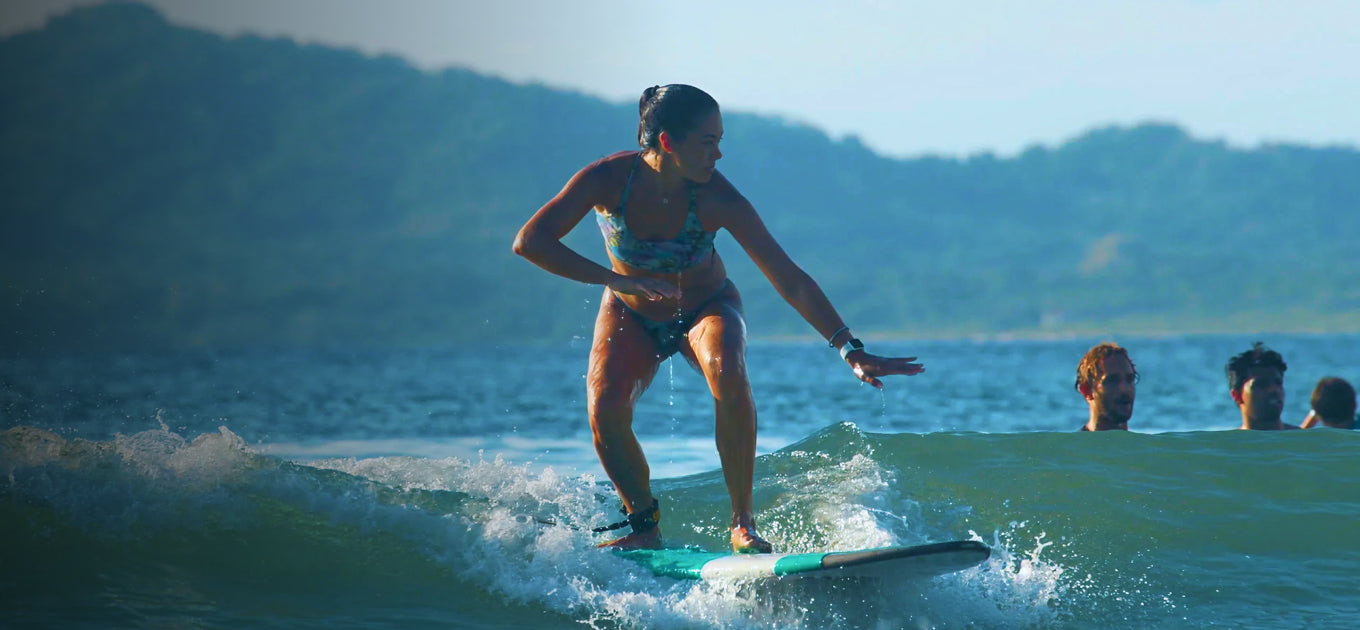

An El Salvador surf trip to El Zonte means eight days on a short stretch of black-sand coast in La Libertad, surfing right-hand point breaks that are soft enough on the inside for first-timers and long enough on the outside for anyone with a few sessions behind them. The swell is most consistent from roughly March to October, the water is warm all year, and the neighbouring surf town of El Tunco is a short ride down the coast road. It suits complete beginners, improvers stuck on the foam board, and anyone who wants one place for a week instead of a checklist.
Now the part the guidebooks skip. El Zonte is small. Like, one-road small. You will know the dog by day two. No boat party, no wristband, no rooftop DJ who thinks he is in Tulum. Just a wave that peels to the right, a beach the colour of espresso grounds, and a group of people who all flew in for the exact same reason you did. (Yes, including the guy who "just came to relax". He will be first in the water by Wednesday.)
Key Takeaways
- El Zonte and El Tunco are neighbouring surf towns on El Salvador's La Libertad coast, about an hour from the international airport.
- The waves are mostly right-hand point breaks: learners stay on the inside, improvers work the outside.
- The swell runs most consistently from about March to October, and the water is warm enough for boardshorts and a rash guard all year.
- Santa Ana volcano and Lake Coatepeque are the classic day trips from the coast, and yes, you can swim in a crater.
- YFAB's El Zonte trip runs 8 days / 7 nights in a group of 5 to 12 people, including the creator trip leader, with beginner lessons included.
Where Exactly Is El Zonte, and Why Do Surfers Keep Ending Up There?
El Zonte sits on El Salvador's Pacific coast, in La Libertad, a few kilometres west of El Tunco and about an hour from the international airport. You land, you drive, you are looking at a lineup before your phone has finished downloading your work emails. (Do not.)
The coast has been branded Surf City by El Salvador's Ministry of Tourism, and the International Surfing Association held its World Surfing Games there in 2021 and 2023, on the breaks around El Tunco. That is the sport's governing body deciding the world's best should compete here. Condé Nast Traveler and Lonely Planet have both covered the coast's shift from a spot surfers whispered about to one they book flights for, and both keep landing on the same word: consistent.
El Tunco is the busier sibling, named after the pig-shaped rock at the end of the beach (tunco is local Spanish for pig, which tells you how seriously it takes itself). El Zonte is the same waves with fewer people shouting over reggaeton. On our El Salvador trips the group is based in El Zonte and dips into El Tunco when the sunset rock calls.
What Are the Waves Like for a Beginner?
Kind, mostly. Surfline's guides describe El Salvador's coast as a string of right-hand point breaks, and a point break is a beginner's best friend: the wave breaks in the same place, in the same direction, over and over. On the inside the whitewater rolls in soft and long, which is where instructors keep first-timers. On the outside, the same wave stands up green and lets improvers chase the thing everybody is secretly there for: the first proper turn.
Water temperature is the other gift. Surfline's spot reports for the area typically show water in the high 20s Celsius (low 80s Fahrenheit) year-round: no wetsuit, no shivering, no excuse. The rash guard is for the sun.
One honest caveat: El Zonte's point breaks over rocks and cobbles, not sand, so you learn to fall flat and walk in like a heron instead of a linebacker. On our El Salvador trips the first lesson happens in a huddle right on the black sand, boards laid out in a row, everyone pretending not to be nervous while the instructor explains that the sand is hot because it is volcanic and that you fall flat, never feet first, because of the rocks.
What Does a Surf Day Actually Look Like?
Early, salty, and shorter than you expect. Point breaks are cleanest before the wind picks up, so the day starts with the tide, not an alarm you chose. Coffee, a stretch on the sand, a lesson or a free surf depending on your level, then a breakfast you paddled two hours to earn.
The middle of the day belongs to shade: hammocks, pupusas, the nap you have been owed since college. Late afternoon there is usually a second window, and this is where the week compounds. Day one you are lying on the board doing the arm thing; by day five you are paddling for waves alone and, occasionally, catching them. Our guide to what nobody tells beginners about a first surf trip covers the soreness and the wipeout etiquette in full.
Here is the challenge, since you are reading about El Salvador and not a spreadsheet: what is your actual reason for not doing this? Not the one you give at brunch. The real one.
What Happens When the Surfing Stops?
The group happens, and it happens fast. You spent the morning falling off a board in front of eight strangers, so there is nothing left to be cool about. Hostelworld's solo travel research keeps finding the same thing: most solo travellers are not loners, they went alone because nobody in their group chat would commit to dates. In El Zonte, that group chat is finally full of people who said yes.

On our El Salvador trips the evenings settle into a rhythm nobody plans: the whole group in the infinity pool above the beach as the sky goes orange, drinks up, someone still in a rash guard. Later, a movie night with surf footage on a projector, which sounds small until the same wave is breaking outside in the dark. This is the Camp Effect: eight days, one hobby, friendships that would take a year to form back home over Slack.
Meanwhile, your friend who "would totally do this" has been saying it since roughly season two of Stranger Things. We love that friend. That friend is not coming.
What Do You Do on the Day Off?
You climb a volcano, because in El Salvador that is a normal Tuesday. Santa Ana, the country's highest volcano, has a turquoise crater lake at the summit that looks like someone spilled a mouthwash commercial into the earth. Lonely Planet lists the Santa Ana hike and nearby Lake Coatepeque, a vast crater lake ringed by hills, as the classic day trips from the coast. Neither is a surf thing. Both are what you talk about on the flight home.

On our El Salvador trips the volcano day tends to become the group's origin story: the hike up through cloud, the moment you break above it and the whole country is a white blanket below, then the crater lake, where the group ends up floating on their backs in water that used to be a volcano's mouth. Back to the coast for sunset at the El Tunco rock, salty, sunburnt, oddly quiet. Not a sightseeing route. One place, one hobby, one day of gawking at geology.
Who Comes Home Different?
The person who arrived with a reason not to. Marcus, say, works remotely from Denver, surfs mostly in YouTube tutorials, and had never left the country without a work laptop. By day four he had stood up on a green wave, sung badly in a pool, and stopped checking the time. He did not come home a surfer. He came home someone who books the next trip before the Sunday scaries can talk him out of it. (The Push. Not complicated. Just rare.)
This is where YFAB fits, as one option. The El Zonte surf trip runs 8 days / 7 nights in a group of 5 to 12 people, including the creator trip leader, with beginner lessons included. That size is deliberate: small enough that nobody disappears, big enough for real variety, the sweet spot Priya Parker describes in The Art of Gathering. Weighing a camp against a small-group trip? Our post on surf camp vs surf trip makes the honest case for both.
| Destination | Wave style | Best for | Duration | Group size |
|---|---|---|---|---|
| El Zonte, El Salvador | Right-hand point breaks | Beginners and improvers, warm water, one small town | 8 days / 7 nights | 5 to 12, incl. trip leader |
| Tamarindo, Costa Rica | Forgiving beach breaks | Complete beginners, jungle coast | 8 days / 7 nights | 5 to 12, incl. trip leader |
| Taghazout, Morocco | Long right-hand points | Beginners to intermediates, desert backdrop | 8 days / 7 nights | 5 to 12, incl. trip leader |
The trips are for anyone who wants to leave town for a bit; the ocean does not check IDs.
Frequently Asked Questions
Is El Zonte good for beginner surfers?
Yes, El Zonte's right-hand point break has a soft inside section where the whitewater rolls in predictably, which is where instructors keep first-timers. Improvers work the outside of the same wave.
When is the best time to surf in El Salvador?
The most consistent swell runs from roughly March to October, according to Surfline's guides to the coast. The water stays warm all year, so the dry season still delivers smaller, cleaner waves for beginners.
Do I need a wetsuit for surfing in El Salvador?
No, the water is warm enough for boardshorts and a rash guard year-round. Bring reef-safe sunscreen and reef booties for El Zonte's rocky bottom.
Can you swim in a crater lake near the surf coast?
Yes, at Lake Coatepeque, the large crater lake that Lonely Planet covers as a standard day trip from the coast. The summit lake on Santa Ana volcano itself is for looking at, not swimming.
Is a surf trip to El Salvador good for solo travellers?
Yes, a small-group surf trip is one of the easiest ways to travel alone without being alone. On YFAB's El Zonte trip you join 5 to 12 people, including the trip leader, and the surfing does the introductions.


