
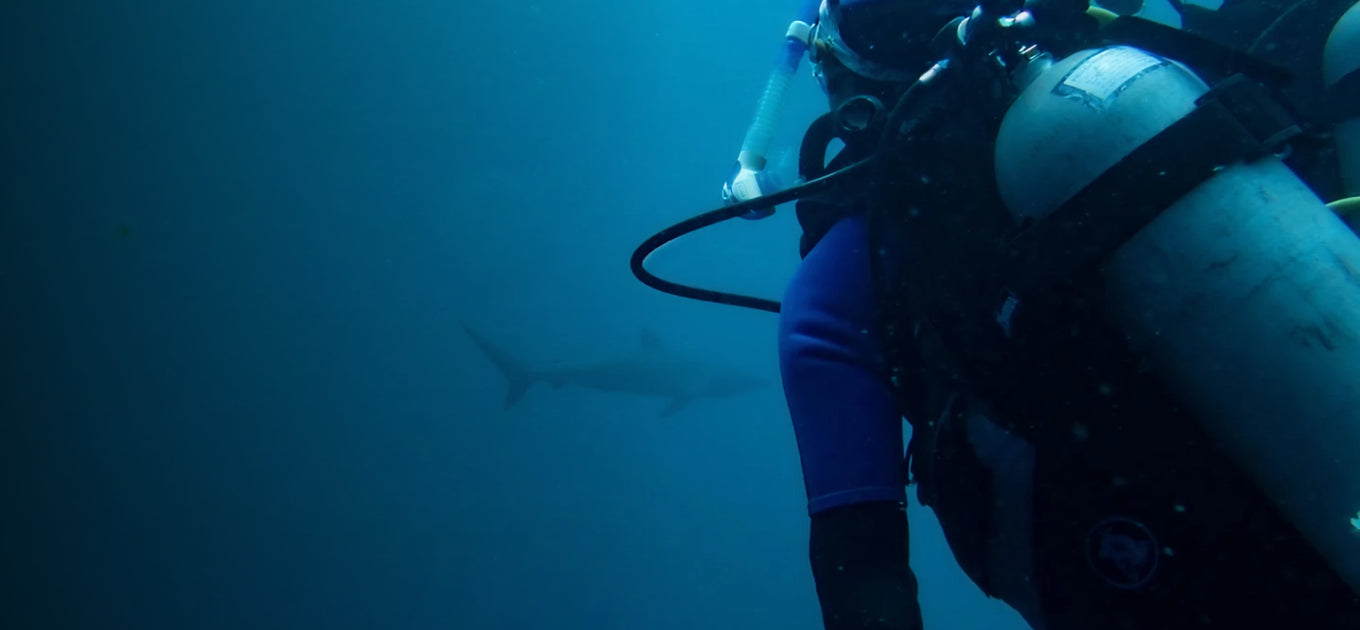

The Koh Nang Yuan day trip lands on the last full day of a Koh Tao dive trip because divers should not fly for at least 12 hours after a single no-decompression dive, and at least 18 hours after repetitive dives or multiple days of diving, according to Divers Alert Network (DAN) and PADI. On an 8 days / 7 nights dive week, the simple version of that rule is a full dry day before the flight home: a boat ride, a white sandbar, a viewpoint climb, and no tank on your back. It applies to first-timers fresh out of their PADI Open Water course and to divers with hundreds of logged dives alike.
So no, the dry day is not the resort being lazy. It is physics, and it is the best-kept secret of any dive week. (The secret is that the day you do not dive is the day you actually remember.)
Key Takeaways
- DAN and PADI recommend waiting at least 12 hours before flying after a single no-decompression dive and at least 18 hours after multiple dives or multiple days of diving.
- A dive trip that ends with a flight therefore has a dry last full day; on a Koh Tao dive week, that day goes to Koh Nang Yuan.
- Koh Nang Yuan is three small islands joined by a white sandbar just off Koh Tao's northwest coast, with the John-Suwan viewpoint above it.
- The dry day is when a group of strangers becomes a group of friends, because nobody has a dive briefing to run to.
Why Is the Last Day of a Dive Trip Dry?
Because every dive loads your body with nitrogen, and flying too soon afterwards can turn that nitrogen into bubbles. At depth you breathe air at higher pressure, so nitrogen dissolves into your tissues. Back at the surface it leaves slowly through your lungs, over hours. A plane cabin is pressurised to the equivalent of 2,000 to 8,000 feet of altitude, which is lower pressure than sea level, and lower pressure lets nitrogen come out of solution faster than your body can clear it. That is decompression sickness, and DAN's flying after diving guidance exists to keep you out of a hyperbaric chamber.
After a week of two or three dives a day, you are not dealing with one dive's worth of nitrogen. You are dealing with a week's worth. Your tissues are still quietly off-gassing on the last morning even though you feel fine. (You always feel fine. That is the problem with nitrogen. It does not send a calendar invite.)
How Long Should You Wait to Fly After Diving?
The minimum recommended surface interval before flying is 12 hours after a single no-decompression dive and 18 hours after multiple dives in a day or multiple days of diving, per the DAN Flying After Diving guidelines, which PADI teaches in its Open Water course. Dives that required decompression stops call for substantially longer than 18 hours. Those are minimums; both DAN and PADI describe longer waits as safer.
| Your dive profile | Minimum wait before flying | Simple version |
|---|---|---|
| One no-decompression dive | 12 hours | Skip the morning dive, fly at night |
| Several dives in one day | 18 hours | A full dry day |
| Several days of diving (a dive trip) | 18 hours, longer is safer | A full dry day plus a good sleep |
| Any dive needing decompression stops | Substantially longer than 18 hours | Talk to your instructor |
A dive trip is that third row. The smart move is the last column: the whole final full day stays dry. Wake up, no wetsuit, no nitrogen math. Your dive computer will show a no-fly countdown too; follow whichever is longer, the computer or the DAN table, never whichever is more convenient. (Convenience is how people end up telling stories that begin with "so I was in the chamber".)
What Is Koh Nang Yuan, and Why Spend the Dry Day There?
Koh Nang Yuan is a small private island just off the northwest coast of Koh Tao in the Gulf of Thailand, and it is really three small islands joined by a strip of white sand. The Tourism Authority of Thailand and Lonely Planet both file it under the same heading: the postcard of the area. From the water you see three green humps; from the top you see the sandbar stitching them together, with pale shallows on either side.
That top is the John-Suwan viewpoint, and the climb is short and scrambly, rocks and roots rather than stairs. Ten minutes, some sweating, one view that makes the whole boat go quiet for a moment before the phones come out.
On our Koh Tao trips, Koh Nang Yuan is the day trip built into the last full day, and it is included in the week. For divers there is a twist: Koh Nang Yuan is also one of the headline dive sites of the week, alongside Sail Rock and the pinnacles (whale sharks in season, never promised).
What Does the Koh Nang Yuan Day Actually Look Like?
A boat ride out in the morning, a walk across the sandbar, the viewpoint climb, and a slow afternoon in shallow water with no scuba on. That is it. Nobody has a buddy check at nine sharp.
The sandbar is the main event. At low water you walk from one island to another across it. Bring a reusable water bottle (the island is strict about plastic), a hat, and shoes you can scramble in; this is not a flip-flop climb. The week's base is The Dearly dive resort in Chalok Baan Kao, the quieter bay on the south of the island, so the return is short and the evening is yours.
Can You Snorkel on a No-Fly Day?
Yes, in shallow water and without scuba. A surface swim with a mask and snorkel does not load your tissues with nitrogen the way breathing compressed air at depth does, so a shallow paddle off the Koh Nang Yuan sandbar is fine under DAN's guidance. What you should not do is talk yourself into "just one shallow scuba dive". Shallow scuba is still scuba, and the 18-hour clock starts again.
The honest rule of thumb for the last day: if it needs a regulator, it waits until your next trip. If it needs a mask and a pair of lungs, go.
What Does the Dry Day Do for the Group?
It turns a week of dive buddies into a group of friends, because it is the first day nobody is busy. Dive days have a rhythm: briefing, gear, boat, dive, surface interval, dive, lunch, logbook, nap. The dry day removes the schedule and leaves the people.

On our dive trips, the last day is when the week gets sealed. The boat ride is where people finally ask the questions they skipped on day one. The viewpoint is where somebody admits they were terrified on their first open water descent and everybody else admits the same. The crew who spent the week hauling your tanks around are suddenly people with names and opinions about the reef. The last dinner is the long one. And the ferry back to the mainland the next morning is where the group chat gets named. (Badly. It is always named badly.)
This is the Camp Effect, and it is not an accident. A group of 5 to 12 people, including the trip leader, is small enough that nobody disappears for a week; Priya Parker makes the same case for small groups in The Art of Gathering. Add a single shared hobby and a week with no exit, and the dry day is the payoff.
Pew Research Center's 2023 survey on friendship in America found that 8% of US adults say they have no close friends at all. Adult friendships are hard to start because nothing forces them. A dive week forces them. (Your friends at home have been "meaning to get certified" since the second season of Stranger Things. You went and did it.)
Be honest: when was the last time you spent a whole day with a group of people and nobody opened Slack?
How Do You Plan the Rest of the Trip Around the Dry Day?
Fly home the day after the last full day, and treat every other day as a dive day. On a Koh Tao week that means the full PADI Open Water course for beginners and fun dives for certified divers, with the night dive and Advanced Open Water upgrade as extras. Then Koh Nang Yuan. Then the ferry home, together, with the Sunday scaries nowhere in sight.
If the night dive tempts you, read what a first night dive actually feels like first. Our guide on what to pack for a dive trip covers the boring but useful stuff. And all the current YFAB dive trips sit in one place, each with a group of 5 to 12 people including the trip leader.
Whichever trip you pick, the dry day is not the day you lose. It is the day you keep.
Frequently Asked Questions
How long after diving can you fly?
Wait at least 12 hours after a single no-decompression dive and at least 18 hours after multiple dives or multiple days of diving, per DAN and PADI. Longer is safer.
Why is the last day of a dive trip a no-dive day?
Because a week of daily diving leaves nitrogen in your tissues, and flying too soon can cause decompression sickness. A full dry day is the simplest way to meet the 18-hour rule with a margin.
Is Koh Nang Yuan part of Koh Tao?
Koh Nang Yuan is a separate private island just off the northwest coast of Koh Tao, made of three small islands joined by a white sandbar, reached by boat.
Can you snorkel the day before flying?
Yes, in shallow water and without scuba. Surface snorkeling does not load your body with nitrogen the way breathing compressed air at depth does, so it does not affect the no-fly interval.
Is the John-Suwan viewpoint climb hard?
No, but it is a scramble over rocks and roots rather than a staircase, so wear proper shoes. About ten minutes, and the view over the sandbar is the reward.


