

The best way to train for a surf trip is to build paddling endurance and general mobility in the few weeks before you go, because the thing that ends most beginners' sessions is not fitness in general but shoulder and back fatigue from paddling. You do not need to be an athlete to enjoy a surf week; you need arms that can paddle for a couple of hours and a body that can pop up off the board repeatedly. A little prep turns a brutal day two into a fun one.
Here is the honest surprise waiting for every first-timer. Surfing looks like a leg sport and is secretly an arm sport. You will discover muscles in your back you have never been introduced to. (They will introduce themselves. Loudly. On the second morning.)
Key Takeaways
- The limiter for beginners is paddling endurance, not overall fitness; arms and back give out first.
- A few weeks of light prep is plenty: swimming, rows, and pop-up practice on the floor.
- Mobility matters as much as strength; a stiff back makes the pop-up harder than it needs to be.
- You do not need to be fit to start; instructors scale everything, and the week itself builds fitness.
- Rest and hydration on the trip matter more than any pre-trip workout.
Which Muscles Does Surfing Actually Use?
Mostly the ones you do not train at a desk. Paddling is the bulk of surfing, and it works the shoulders, upper back and neck, which is why beginners are sore in places they did not expect. The pop-up, going from lying to standing in one motion, is essentially a burpee, so it asks for core, chest and a bit of leg spring. Physical-activity guidance from bodies like the American Heart Association points at exactly this mix: cardiovascular endurance plus functional strength beats isolated gym lifts for a sport like this.
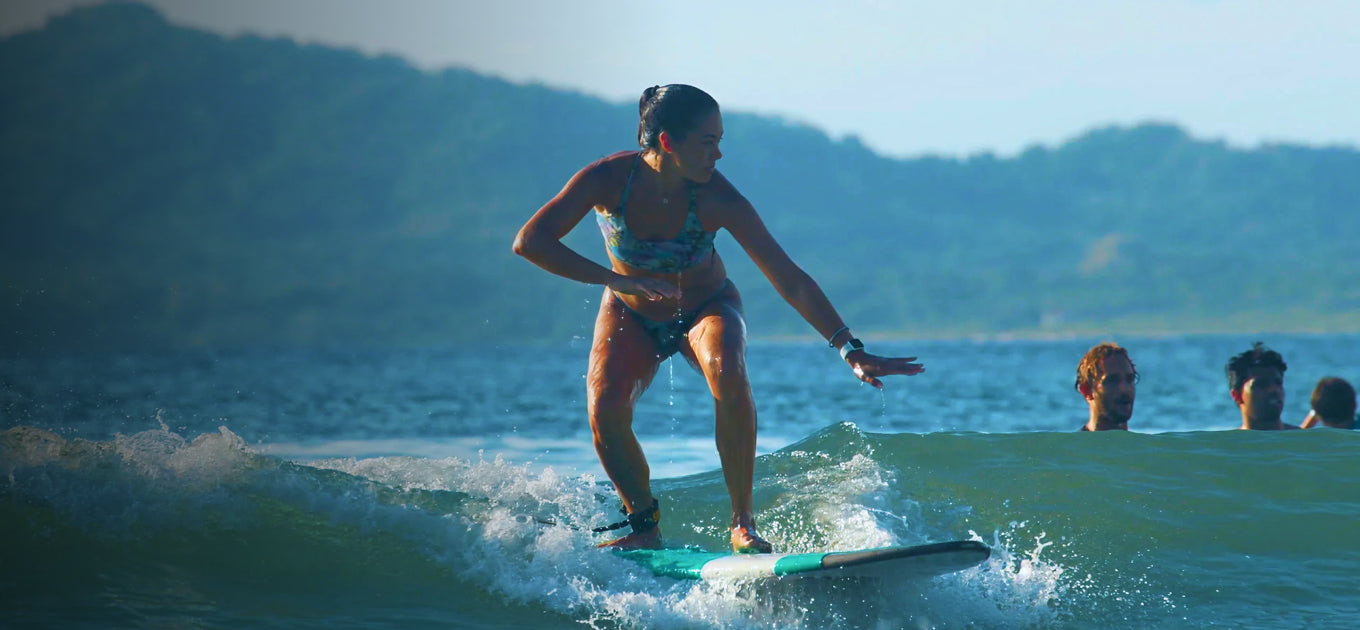
Legs matter too, but less than people assume. You use them once you are up and riding, which for a beginner is a small fraction of the session. The other 90% is paddling, and that is where the fatigue lives.

What Should You Actually Do in the Weeks Before?
Keep it simple and specific. Swimming is the single best prep, because it trains the exact paddling muscles and your breathing at once; even a couple of easy sessions a week helps. Add some rows or resistance-band pulls for the upper back, and practice the pop-up on your living room floor, slow and correct, until the motion feels familiar. That floor practice is the highest-value thing on this list, and it costs nothing.
Mobility is the quiet other half. A stiff thoracic spine makes arching up to paddle and popping up harder than it needs to be, so a few minutes of back and hip mobility most days pays off. None of this needs a gym membership or a program. Consistency over a few weeks beats one heroic session.
| Focus | Why it matters | Easy version |
|---|---|---|
| Paddling endurance | The number one limiter for beginners | Swim twice a week |
| Upper-back strength | Supports hours of paddling | Rows or band pulls |
| Pop-up power | The move you repeat all session | Floor pop-ups, slow and clean |
| Back and hip mobility | Makes paddling and popping up easier | A few minutes most days |
Do You Actually Need to Be Fit to Go?
No, and this is the part worth hearing clearly. Instructors scale every lesson to the group, beginners start in gentle whitewater, and plenty of people arrive with zero surf fitness and have a brilliant week. The prep above is not a gate you have to pass; it just makes the first days more fun and less achy. The International Surfing Association builds beginner progression around short, guided sessions precisely so that fitness is not a barrier to starting.
The trip itself is the best training there is. A week of daily surfing builds paddling fitness faster than any pre-trip plan, which is why day five almost always feels easier than day two, even though you are doing more.
What Matters More Than Any Workout?
Recovery, once you are there. Sleep, water, and one genuinely lazy session beat pushing through soreness every time. On our surf trips the mornings that follow a big day often start with a stretch on the sand, not because it is fancy, but because paddling into cold water with cold muscles is how people tweak a shoulder. Warm up, hydrate, and do not try to out-tough the ocean.
If you want the honest picture of what those first days feel like, our guide to what nobody tells beginners about a first surf trip covers the wipeouts and the soreness in full. The trips run 8 days / 7 nights in groups of 5 to 12 people, and they are built for people arriving unfit and nervous.
Frequently Asked Questions
Do I need to train before a surf trip?
You do not have to, but a few weeks of light prep makes the first days much more comfortable. The main thing to build is paddling endurance, since arms and back tire before legs do.
What is the best exercise to prepare for surfing?
Swimming, because it trains the exact paddling muscles and your breathing at the same time. Add upper-back rows and floor pop-up practice for the biggest gains.
Why are my arms so tired when I surf?
Because surfing is mostly paddling, which works the shoulders and upper back. Beginners spend far more time paddling than riding, so those muscles fatigue first.
How fit do I need to be for a beginner surf trip?
Ordinary fitness is enough. Instructors scale lessons, beginners start in gentle whitewater, and the week itself builds surf fitness. Prep helps comfort, but it is not a requirement.
How long before a trip should I start training?
A few weeks is plenty. Consistency matters more than intensity, so a couple of easy swims a week plus floor pop-ups beats one hard session.
What helps most once I am on the trip?
Recovery: sleep, hydration, warming up before you paddle out, and taking one easy session when you are sore. That does more for your week than any pre-trip workout.


