
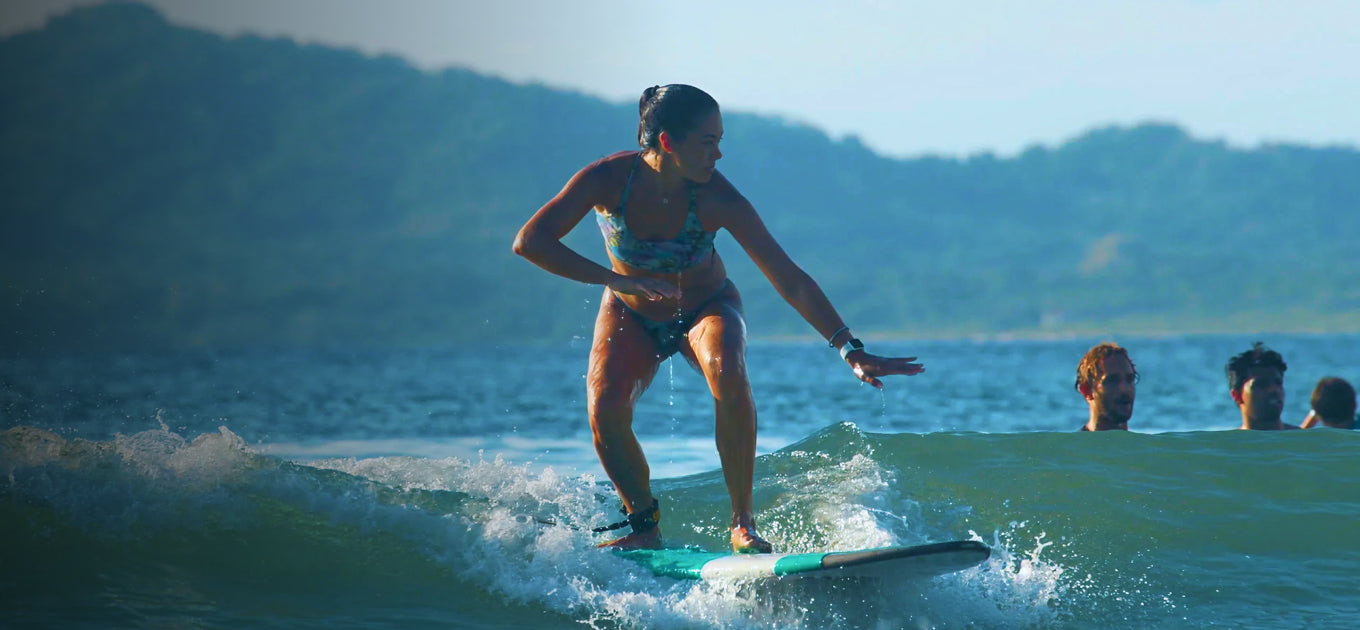

A week surfing in Tamarindo means seven mornings in warm water on the northern Pacific coast of Costa Rica, on a sandy-bottom beach break that forgives almost everything a beginner does wrong. YFAB runs it as 8 days / 7 nights with a group of 5 to 12 people, including the trip leader. It works whether you have never stood on a board or you have been stuck at the same wobbly level for three summers.
Here is the part nobody puts in the brochure. By Wednesday you stop counting waves. You start reading the water, badly at first, then less badly, and somewhere in there you forget to check your phone for four hours. That is the actual product. The surfing is just the excuse that gets you there.
Key Takeaways
- Tamarindo is a sandy-bottom beach break, which means falling is boring instead of dangerous, and that is exactly why it suits first-time surfers.
- The Pacific water off Guanacaste sits in the high 20s Celsius all year, so no wetsuit, no cold-water excuses.
- YFAB Tamarindo runs 8 days / 7 nights in a group of 5 to 12 people, including the trip leader.
- Costa Rica's dry season runs roughly December to April, but Tamarindo has rideable beginner waves every month of the year.
- Most people arrive wanting to learn to surf and leave having accidentally acquired a group of friends.
What Does a Surf Day in Tamarindo Actually Look Like?
Two sessions, one long lunch, and a lot of lying down in between. Mornings start early because the wind is cleanest before it picks up through the middle of the day, a pattern Surfline forecasters describe across most tropical Pacific beach breaks. You paddle out around sunrise, you are done by mid-morning, and the rest of the day belongs to you.
On our Tamarindo trips the instructors usually keep beginners on the inside whitewater for the first two days before anyone is allowed to chase an unbroken wave. It feels like being held back. It is not. The people who skip that step spend the whole week getting worked and never once stand up cleanly.

How Hard Is It if You Have Never Surfed?
Easier here than almost anywhere, because the bottom is sand. A beach break like Tamarindo breaks over a shifting sandbar rather than reef or rock, so a bad wipeout costs you a mouthful of seawater and your dignity, not your skin. The International Surfing Association builds its instructor training around exactly this progression: whitewater first, green waves later, always over a forgiving bottom.
You will not be good after seven days. Let us be honest about that. You will be someone who can catch a wave, ride it in roughly a straight line, and fall off with a bit of style. That is a genuinely different person from the one who landed.
Why Does One Week Change Anything?
Because seven days is long enough to get past the frustration and short enough that you cannot get bored. Day one is chaos. Day three is the first wave you actually feel. Day six is when you catch yourself paddling for something you would not have looked at on Monday. Compress that into a weekend and you only ever meet the chaos.
The group size does its own work here. Priya Parker makes the case in The Art of Gathering (2018) that small groups are where real connection happens, big enough for variety, small enough that nobody can quietly disappear. Five to 12 people is uncomfortably accurate on that front. By day four there are in-jokes. You did not agree to this.
| Destination | What the wave is like | Duration | Best for |
|---|---|---|---|
| Taghazout, Morocco | Long, mellow right-handers | 8 days / 7 nights | First-timers who want the same wave every day |
| Tamarindo, Costa Rica | Sandy-bottom beach break, warm water | 8 days / 7 nights | Never surfed, or stuck at wobbly |
| El Zonte, El Salvador | Point break, rockier entry | 8 days / 7 nights | You already stand up and want more |
When Should You Go, and What Is the Water Like?
Any month, and warm enough that a wetsuit is pointless. Guanacaste water temperatures sit in the high 20s Celsius year round, which is why Tamarindo lessons happen in a rash guard and boardshorts. The Instituto Costarricense de Turismo splits the region into a dry season running roughly December to April and a greener, wetter stretch through the middle of the year.
The wet months are not the problem people assume. Rain in Guanacaste tends to arrive in the afternoon and leave again, and the jungle behind the beach looks considerably better for it. Lonely Planet has been making this point about the Pacific coast for years and it still surprises people every single time.

What Happens Between the Surf Sessions?
Not a packed itinerary, which is the point. Afternoons are open: the waterfall day trip inland, the estuary, or lying flat in a hammock refusing to move. The trip leader is a creator who actually lives the hobby, not a guide with a clipboard and a flag, so plans tend to happen because someone suggested them at lunch.
The evenings are where the week quietly turns. Nobody plans the good bit. It is a bad card game on a hostel patio, or the walk back from dinner where somebody says the thing they have not said out loud to anyone at home. Your boring friends would have suggested a group chat about maybe doing something in September.
If you want the practical version of all this before you book anything, first surf trip tips covers the packing and the etiquette, and best time to surf Tamarindo goes month by month. The Tamarindo surf trip page has the actual dates.
Frequently Asked Questions
Do I need to know how to surf before a Tamarindo trip?
No. The trips are built for people who have never stood on a board. Lessons start in the whitewater with a soft-top foam board, and the first two days are about paddling and popping up rather than catching anything impressive.
How long is the YFAB Tamarindo trip?
8 days / 7 nights, like every YFAB surf trip. That length exists because a week is the shortest stretch that gets you past the frustrating part of learning, and short enough to take off work without a negotiation.
How many people are on the trip?
Between 5 and 12 people, including the trip leader. Small enough that you will know everyone's name by the second dinner, big enough that you are not stuck making conversation with the same two people all week.
What is the water temperature in Tamarindo?
High 20s Celsius throughout the year, so you surf in a rash guard rather than a wetsuit. This is one of the genuine advantages of the Costa Rican Pacific over most other beginner surf destinations.
Is Tamarindo good for solo travelers?
Yes, and most people on these trips come alone. Everyone arrives as a stranger with the same hobby, which removes the awkward part where you have to invent a reason to talk to someone.
What should I bring that people always forget?
Reef-safe sunscreen and a rash guard you can wear all week. The equatorial sun does real damage between sessions, and the top half of a surf lesson is spent lying on a board with your back exposed.


