
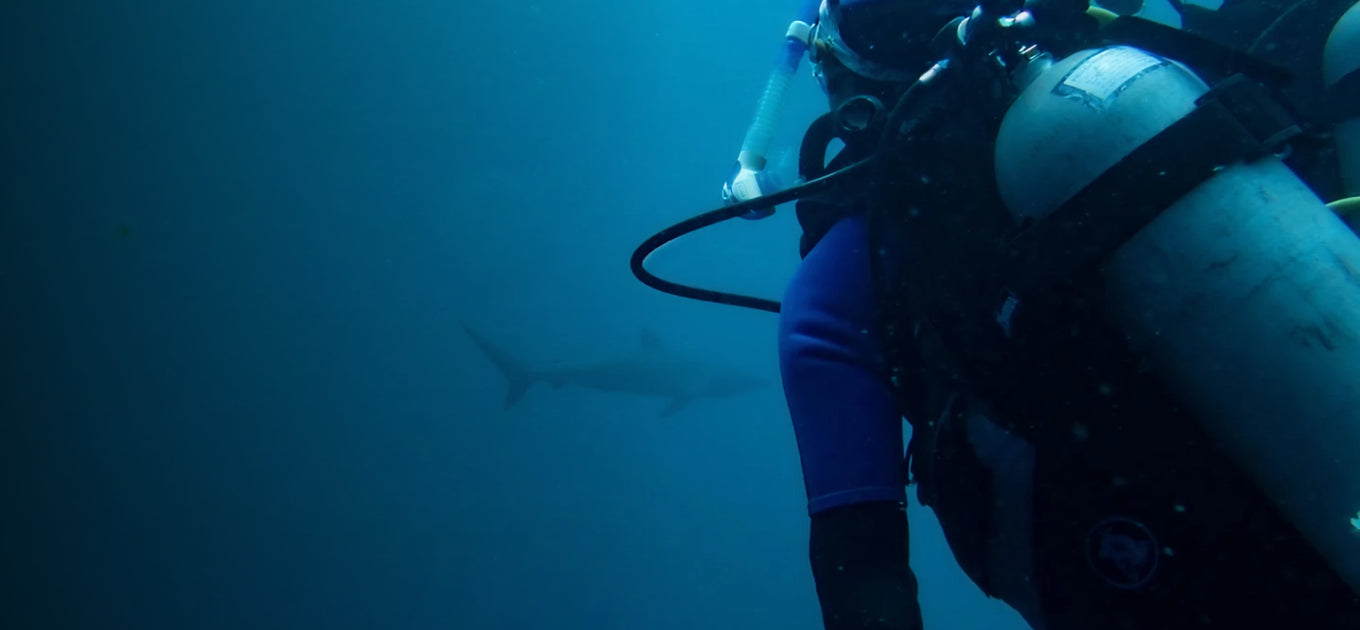


Fear of scuba diving is common, specific, and very fixable: it is almost always fear of breathing underwater, fear of depth, or fear of losing control, and the sport's training system was engineered around exactly those three. PADI's Open Water course starts in water shallow enough to stand up in, introduces every skill twice before it counts, and pairs each diver with a buddy and a professional. Divers Alert Network (DAN), the organization that studies diving safety for a living, consistently frames recreational diving as a low-incident sport when its rules are respected, and the rules are precisely what a guided beginner week enforces.
None of which quiets your brain the first time the water closes over your head. So let's talk about what that moment is actually like, and why it stops being scary somewhere around your fourth breath.
Key Takeaways
- The fear is nearly always breathing, depth, or control, and the training addresses each one directly.
- Everything is learned standing-depth first: no skill happens deep before it happened shallow.
- The buddy system means you are never alone underwater, by design and by rule.
- Panic has a protocol: stop, breathe, signal. Instructors drill it until it is boring.
- Most nervous beginners describe the same arc: dread, then focus, then forgetting to be afraid.
What Is the Fear Actually Made Of?
Three things, usually tangled together. Breathing underwater contradicts a lifetime of instinct, so your body flags it as an emergency for the first minute. Depth reads as no-exit, even though a controlled ascent is always available and practiced. And handing your safety to equipment feels like losing control, until you learn the equipment yourself and realize how redundant it is: two air sources, a pressure gauge you check constantly, a buddy carrying spares of everything.
Naming which fear is yours matters, because each has a different fix, and instructors adjust for it. Tell them. They have heard it hundreds of times and it changes nothing about whether you can do this.
How Does Training Actually Dismantle It?
By sequencing. The first breaths happen in water where standing up is the escape plan. Mask skills, regulator skills, buoyancy: each is demonstrated, tried, repeated, and only then taken slightly deeper. The four open-water dives that finish a certification only rehearse what the shallow sessions already made routine. It is exposure therapy with better scenery, and it works the way all good exposure works: gradually, then suddenly.

The group is the secret ingredient nobody advertises. Watching another nervous beginner nail the mask clear you are dreading rewires your estimate of how hard it is. By the second day the group has a running scoreboard of small victories, and fear does badly against a scoreboard.
What If I Panic Underwater?
Then you do the thing you drilled: stop, breathe, think, act. Panic in diving is managed with a protocol, not with courage. Instructors keep new divers shallow, close, and within arm's reach precisely so that a wobble stays a wobble, and DAN's safety guidance hammers one line above all: most problems are prevented or solved by slowing down and breathing. You will hear it so often it becomes a reflex, which is the point.
There is also an unglamorous truth worth having: you can stand up in the water where the scary parts are first practiced. The mask-flood moment that keeps people awake the night before happens at a depth where the exit strategy is your legs. On our dive trips, the story retold at dinner is never the fear; it is how fast it left.
| The fear | What it really is | What fixes it |
|---|---|---|
| Breathing underwater | Instinct flagging novelty as danger | First breaths at standing depth, repetition |
| Depth | Feeling of no exit | Practiced ascents, gradual progression, a guide |
| Losing control | Trusting unfamiliar equipment | Learning the gear, redundancy, the buddy system |
Does the Fear Ever Fully Go Away?
It converts. What starts as dread becomes task focus, and task focus underwater has a strange side effect: silence. No phone, no talking, just breath and fish. Plenty of divers who arrived terrified describe the sport afterwards as the calmest hours of their year, and they tend to say it while booking the next trip. The certification is real (PADI Open Water, yours for life), but the actual product is that mental quiet.
Doing it alongside strangers who become friends is the multiplier. A group of 5 to 12 people including the trip leader, everyone learning the same skills, is the same social chemistry that makes meeting people while traveling alone work so reliably. If you want the fear-to-hooked pipeline in its natural habitat, the current dive weeks are on the YFAB trips page.
Frequently Asked Questions
Is scuba diving safe for beginners?
Yes, within its rules. Guided recreational diving keeps beginners shallow, supervised, and inside conservative limits, and safety organizations like DAN attribute the sport's low incident rates to exactly that structure.
Can I try breathing underwater before committing to a course?
Yes. Confined-water intro sessions exist for exactly this: standing depth, an instructor next to you, no obligation. Many people book the full course the same afternoon.
What if I have claustrophobia?
Tell the instructor; it is common and workable. Most claustrophobic divers report open water feels roomy rather than closed, and masks with clear skirts and gradual pacing help. A medical questionnaire is part of every course, so specific concerns get addressed before the water.
Do I have to be a strong swimmer?
Comfortable beats strong. The PADI standard is a 200 meter swim with no time limit plus ten minutes of floating; technique does not matter.
What happens if I use up my air?
You will not, because you check a gauge constantly and surface with a wide reserve, and your buddy carries an alternate air source. Running out is a solved problem the system is designed to prevent twice over.
How deep do beginners actually go?
Certification dives stay within PADI's beginner limits, and most of the memorable reef life lives shallow anyway, where the light and the color are.


