

A Taghazout surf trip is 8 days / 7 nights in a Moroccan fishing village built around some of the most consistent right-hand point breaks in the world, with a group of 5 to 12 people who arrive as strangers. Surfline has ranked the area around Anchor Point among the best pointbreak zones on the Atlantic, and the town sits an hour from Agadir airport. Waves for every level, one flight, zero planning required from you.
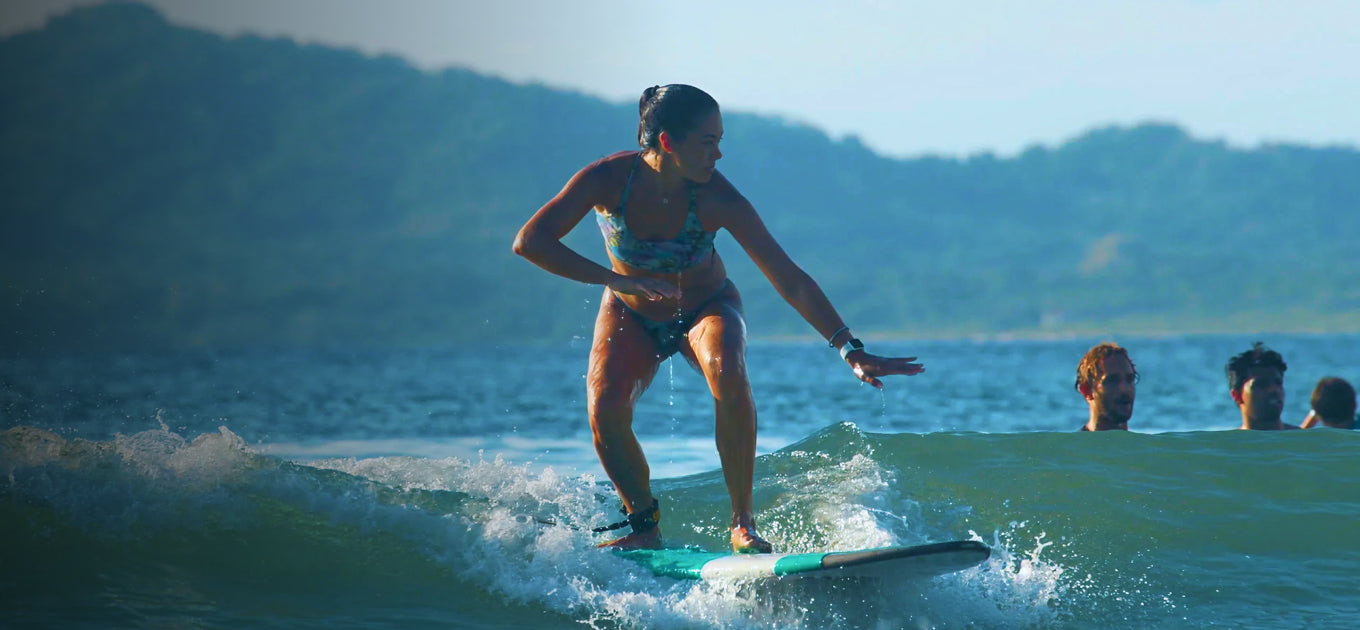
The honest version? You land with 200 unread Slacks. Eight days later you're standing on a wave at sunset while someone you met on Tuesday screams your name from the beach. (Your friends at home are on episode nine of something they don't even like.)
Key Takeaways
- Taghazout surf trips run 8 days / 7 nights with groups of 5 to 12 people, including the trip leader.
- The village has waves for every level: soft whitewater for first-timers, long points like Anchor Point for improvers.
- The week works because it's simple: surf twice a day, eat well, repeat. No itinerary Tetris.
- Most people come alone. That's the point, not a problem.
- Zero surf experience required. First-timers are the norm.
What actually happens to you in a week like this?
Your days get simple, your body gets tired, and your brain finally shuts up. The American Psychological Association has published plenty on how learning new skills builds confidence that spills into regular life. Sure. But you don't need a study. You'll feel it around day three, when the pop-up you kept fumbling suddenly works and the whole lineup cheers like you won something. (You did.)
The rhythm does the work. Dawn light. Mint tea. Wetsuit still damp from yesterday. Surf, eat, nap, surf again. Your phone stays face-down because nothing on it beats what's in front of you.
Why Taghazout and not just any beach?
Because Taghazout is a surf town in the literal sense: the waves are the reason it exists. Whitewashed houses stack down to the water, board shops outnumber pharmacies, and the point breaks fire in a chain along the coast. Anchor Point is the famous one. Surfers have been making the pilgrimage since the seventies. Beginners don't start there, obviously. On our Taghazout trips, the local instructors take first-timers to the softer sandbars around Panorama, where the whitewater is forgiving and the worst-case scenario is a funny story by lunch.

The Moroccan National Tourist Office will tell you the country has everything. True. But the reason Taghazout resets people is the opposite of everything: one town, one hobby, one group. Nothing to optimize. Nowhere else to be.
How do you actually bond with a group of strangers?
Faster than you think, because the format does the heavy lifting. Groups of 5 to 12 people are a design decision, not an accident: in The Art of Gathering (2018), Priya Parker calls this the size where nobody can hide and nobody gets lost. Add two surf sessions a day, shared wipeouts, shared tagine, and a rooftop where everyone ends up after dinner. The small-talk phase dies somewhere around hour six.
There's a name for what replaces it: the camp effect. An intense week around one hobby feels like summer camp did, friendships included. It's the same reason group surf trips for solo travelers work when apps and after-work drinks don't.
What does a day on the trip look like?
A day is built around the tide chart, not a sightseeing list. Morning session at whichever peak fits the group. A long Moroccan lunch. A nap that feels medically necessary. A second session, or the clifftop skatepark for the brave. Dinner, rooftop, repeat. On our trips the mid-week rest day is the wildcard: the dunes south of town, camels on the ridgeline at sunset, and someone attempting sandboarding. (It never goes well. It's always worth it.)

| Destination | Duration | Group size | Best for |
|---|---|---|---|
| Taghazout, Morocco | 8 days / 7 nights | 5 to 12 people | Point breaks, village life, fast progression |
| Tamarindo, Costa Rica | 8 days / 7 nights | 5 to 12 people | Warm water, jungle around the corner |
| El Zonte, El Salvador | 8 days / 7 nights | 5 to 12 people | Uncrowded rights, slow volcanic coast |
Who comes back different?
The person who booked it tired. The remote worker whose Tuesday and Saturday had become the same day. The one who used to have hobbies and now has tabs. Lonely Planet calls Morocco's Atlantic coast one of the great learn-to-surf regions, and fine, yes. But the surfing is the vehicle. What changes people is a week of doing one real thing with their whole body, next to people doing the same, with nobody to perform for.
You'll know it worked on the flight home. You'll be planning the next one before the seatbelt sign turns off, in a group chat that refuses to die. If that sounds like the push you've been waiting for, this is the Taghazout surf trip.
Frequently Asked Questions
Do I need surf experience to join a Taghazout surf trip?
No. Complete beginners are the norm, not the exception. First-time lessons are built into the trip, and instructors match every session to the group's level. Nobody gets thrown to Anchor Point on day one.
How big is the group?
Always 5 to 12 people, including the trip leader. Small enough that nobody disappears. Big enough that you'll find your people.
Can I come alone?
Yes, and most people do. Arriving solo is the standard move. The group forms fast because everyone came for the same week.
How long is the trip?
8 days / 7 nights. Long enough for real progress in the water and real friendships out of it. Short enough to fit around a job.
What is the water like in Taghazout?
Atlantic and refreshing, so everyone surfs in wetsuits most of the year. Check Surfline for current conditions before you start obsessing over the charts. (You will anyway.)
Is Taghazout safe for travelers?
Yes. It's a small, friendly surf village that has hosted traveling surfers for decades. Normal travel common sense applies, and you're rarely figuring anything out alone.
What happens on the rest day?
The dunes, the skatepark, the village, or gloriously nothing. On our trips it usually ends with the whole group watching the sunset from the big dune south of town.


